What it does
Your pancreas is a chemical factory and sugar manager. It has two main jobs.
- Digesting food. It makes digestive juices (enzymes) that break down fat, protein and sugar in the food you eat.
- Balancing blood sugar. It makes insulin, the hormone that moves sugar out of your blood and into your cells. It also makes glucagon, which raises blood sugar when it gets too low.
Doctors call the pancreas both an exocrine gland (it sends enzymes into the gut) and an endocrine gland (it sends hormones like insulin into the blood).
Where it is
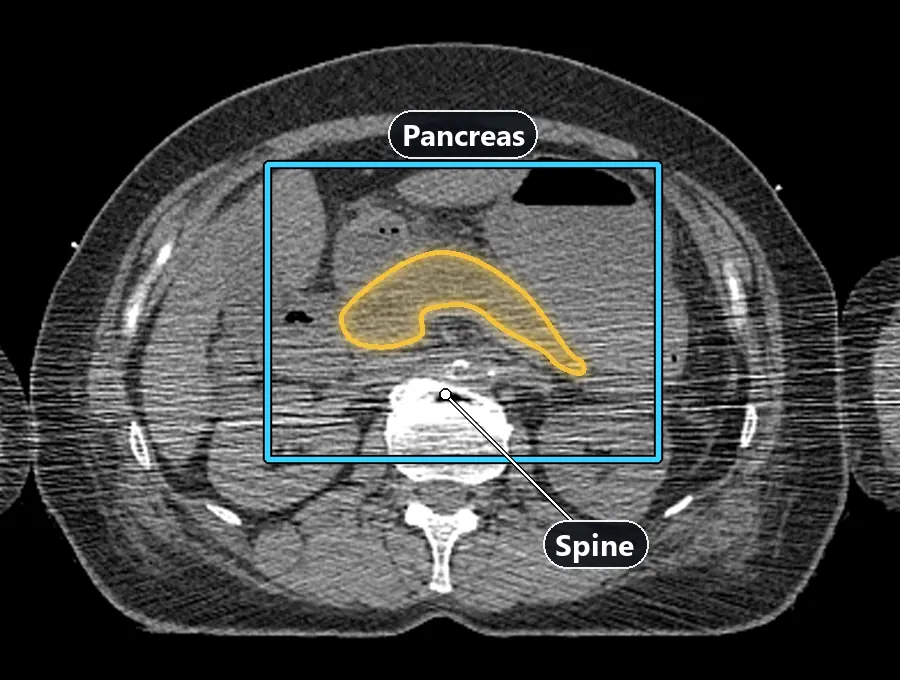
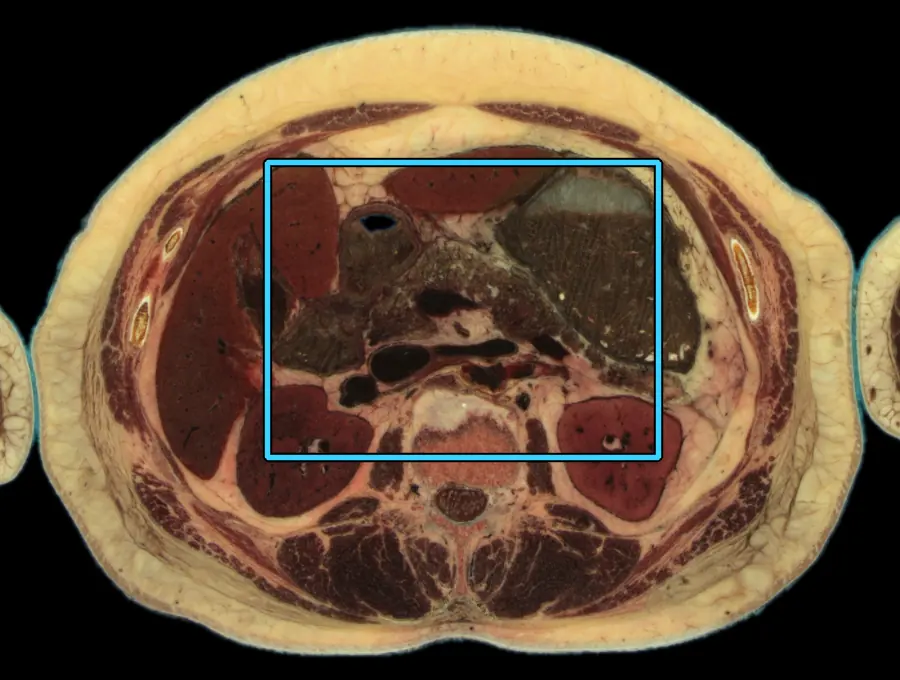
The pancreas lies deep in your belly, right in front of your spine, stretching across the middle of your body. It sits behind your stomach and is about 6 inches long.
On a CT scan it looks like a long, upside-down check mark.
Because it lies right on the spine, a hard hit to the upper belly, like falling onto bicycle handlebars, can squeeze it against the bone and injure it.
How to find it on a CT scan
Look just in front of the spine, across the middle of the belly. The blood vessels of the spleen run right along it, and they are a good landmark for finding it. The wide end (the head) sits on the right, tucked into the curve of the first part of the small intestine. The narrow end (the tail) points left toward the spleen.
Why doctors look at it on CT
Most often, to look for a lump, mass or other change in the pancreas.
What most people don't know
The pancreas's drainage is closely connected to the bile ducts that drain the liver and gallbladder. Bile is another digestive juice. So a mass in the head of the pancreas can block bile from leaving the liver. When bile backs up, the skin and the whites of the eyes can turn yellow (jaundice), urine can turn dark and stools can turn pale.
When to see a doctor
- Pain in the upper belly that can spread to your back
- Greasy, fatty diarrhea that floats or is hard to flush
- Peeing much more often than usual or being very thirsty
- Signs of insulin resistance, such as skin tags or dark, velvety skin in the neck or armpit folds
- Yellow skin or eyes, dark urine or pale stools
- Losing weight without trying
This lesson is for learning, not for diagnosing. If you are worried about a symptom, talk to your doctor.